

Tuesday, March 22, 2011 – Wednesday, March 23, 2011
Today (Tuesday) our journey began with the flight from Zaventem Airport (with stopovers in Paris and Addis Ababa) to Entebbe, Uganda, where we landed the following day at 12:45. First impression: HOT, stuffy, beautiful and lively, and what heavy traffic.
We were picked up by Brad and Sander, two employees of Second Life Uganda. This American and Dutchman briefed us on life in Uganda during the drive from Entebbe to Kampala. Brad and Sander are also men who contribute their share through volunteer work. Sander has helped with street children and Brad with schools. After dropping off and unpacking our suitcases at our accommodation, and after taking a nice bath, we went to the home of Robert Jan Nieuwpoort (owner of Second Life Uganda), his Ugandan wife Annitah, and their son Ross, and had a delicious meal there. We also met Luisa (Robert-Jan's sister) and her husband Kelly from the Netherlands there. Nice guys. During dinner, we were also confronted with a recurring problem: power outages. Eating by candlelight was certainly romantic.
Thursday, March 24, 2011
Today we went to the center of Kampala to do some grocery shopping at Garden City, the largest mall in Uganda. Part of it is the Umuchi supermarket, which you can compare to Lidl, Bas, etc. In general, there is quite a lot available there, and it is cheap. The people in Uganda are friendly and helpful. Clothing, on the other hand, is expensive here. Most people buy their clothes at the many markets Kampala has, mainly second-hand clothing. Furthermore, we went looking for a Ugandan phone card and a device to get internet access. We found these at Orange in the form of a dongle. We had a delicious meal in the mall at one of the many small restaurants for approximately €10 for the two of us.
Friday 25, Saturday 26 and Sunday 27 March 2011
These three days we have rested well and enjoyed the life passing by our house. Saar cooked delicious meals and shared the food with the family guarding the compound.

Monday, March 28, 2011
Today I had a long-awaited conversation with Dr. Rein Zeeman at Mulago Hospital. Rein Zeeman is a co-founder of the Interplast Holland Foundation. He and members of the medical team ensured that a burn unit within this hospital became a reality. When you consider that 1,600 beds in this hospital are fully occupied daily, and that previously burn patients were scattered throughout the hospital
(which consists of three sections), you understand that it was very difficult to get a good overview of the patients.
Now there is a separate department where men, women, and children each have their own section in a large ward. Additionally, that department includes one operating room, one kitchen, one bathroom, and an ICU (intensive care unit).
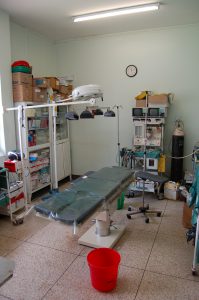
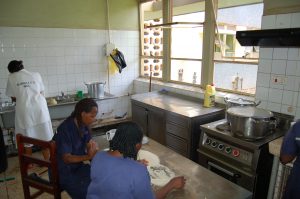

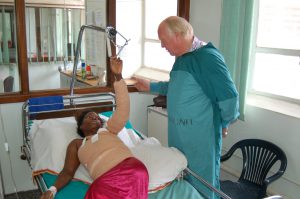
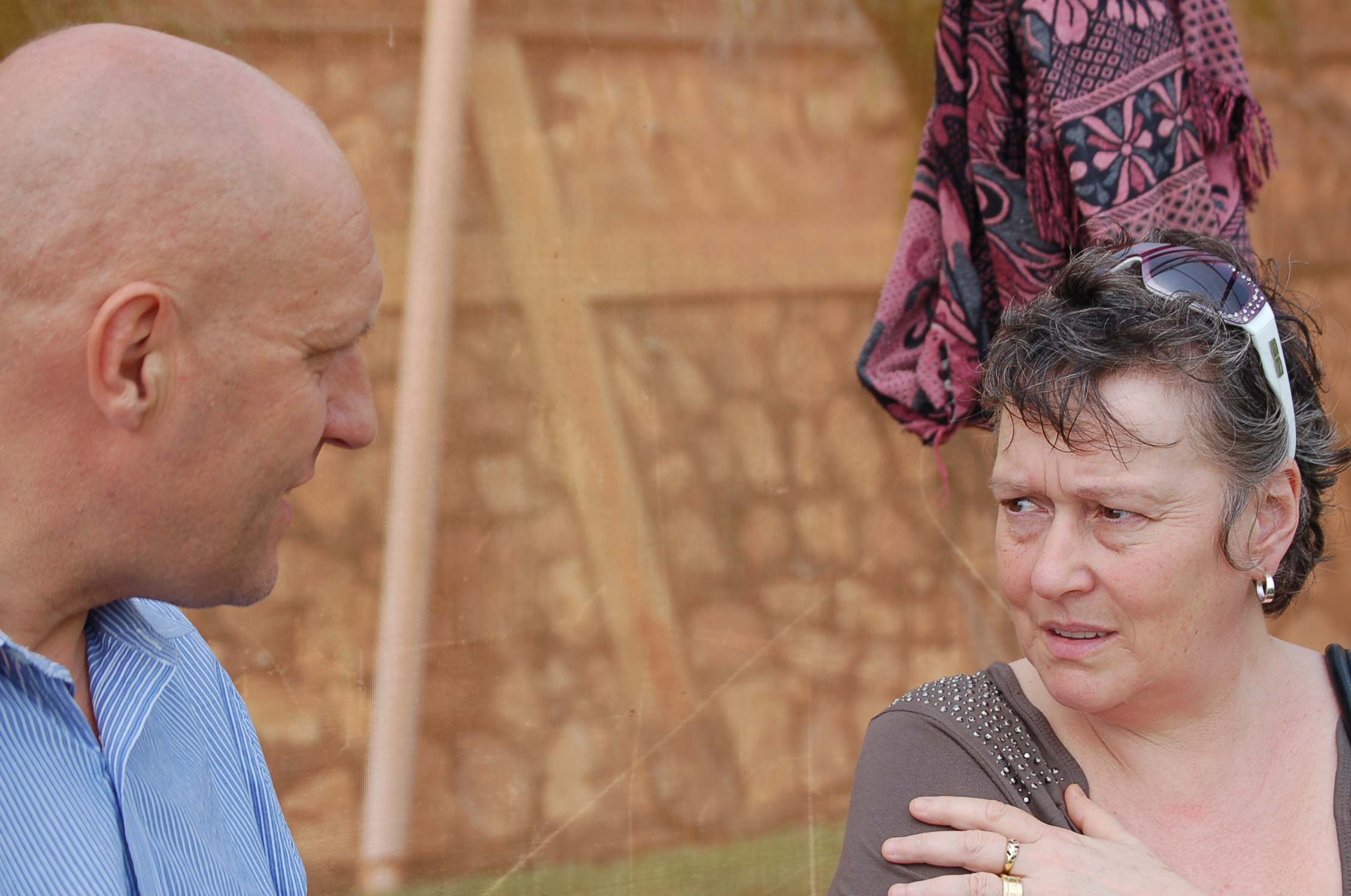
Dr. Rein Zeeman (on the right in the photo in the ICU with a 15-year-old girl who had hot water poured over her body) gave us a tour of this unit, and it was shocking. You can form an image from photos, but the reality is many times different. That is why the work Rein Zeeman does in collaboration with surgeons trained there is invaluable. This is also done in cooperation with the Dutch Burn Foundation in Beverwijk.
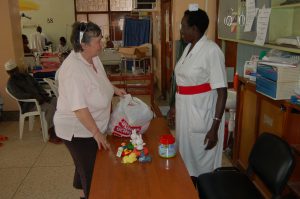
From the Netherlands, we, as a foundation, were able to present gifts in the form of bath toys to the head nurse of the burn unit. These consisted of toys featuring Woezel and Pip and their friends. From the reactions, we could tell that they were very happy with them. The children with burns have their bandages changed every other day. This is done in a bath to loosen the bandages. So these toys provide a distraction, as the changing is a very painful trauma.
The culprit:
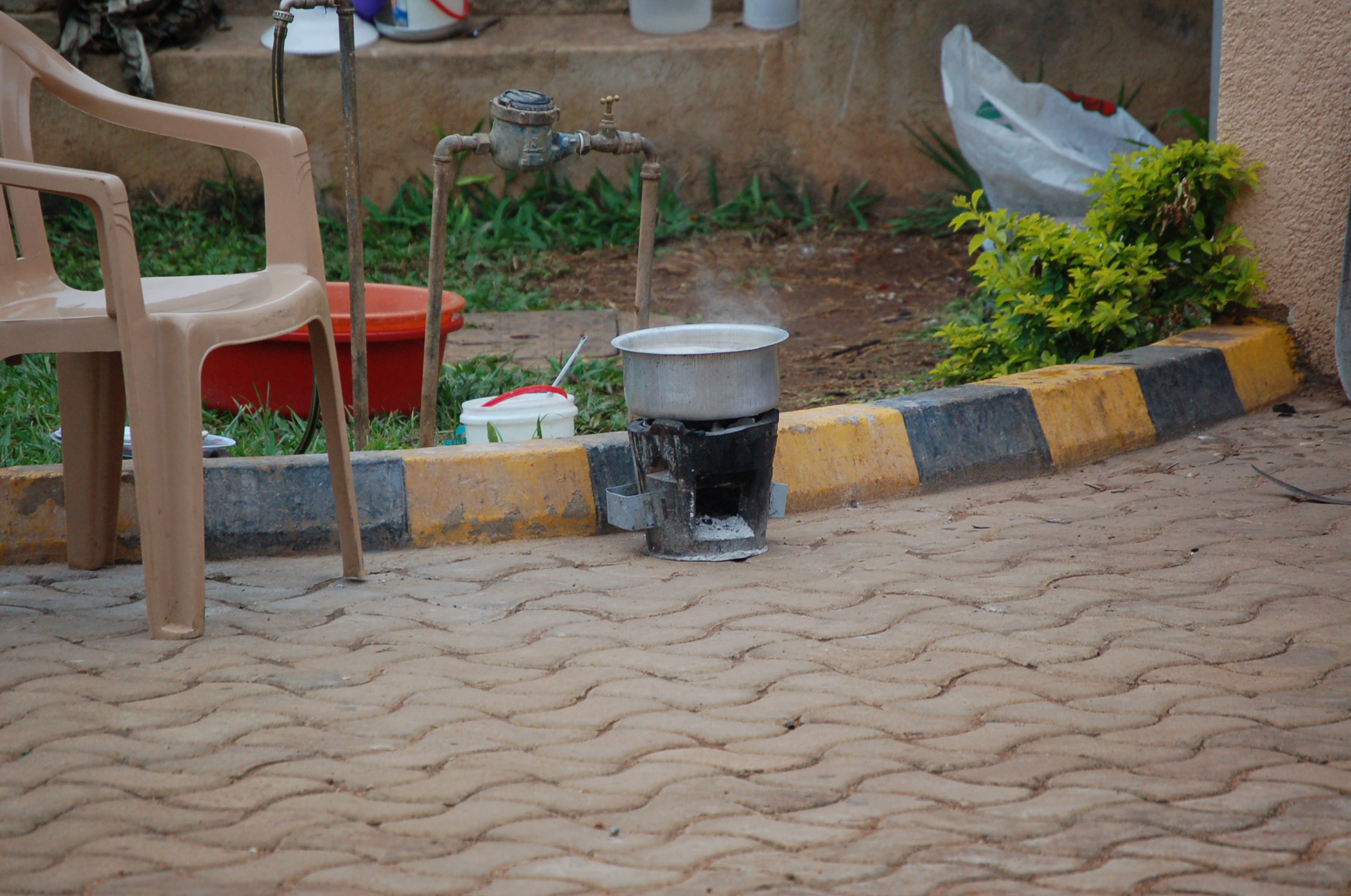
The biggest cause of burns among young children is the cooking pot used in the slum huts.
They need this pot to boil water for laundry, washing dishes, and also to prepare food.
These pots stand very precariously in the small huts where most children play and sleep on the floor.
The victims:
5-month-old child

Child of 2 years
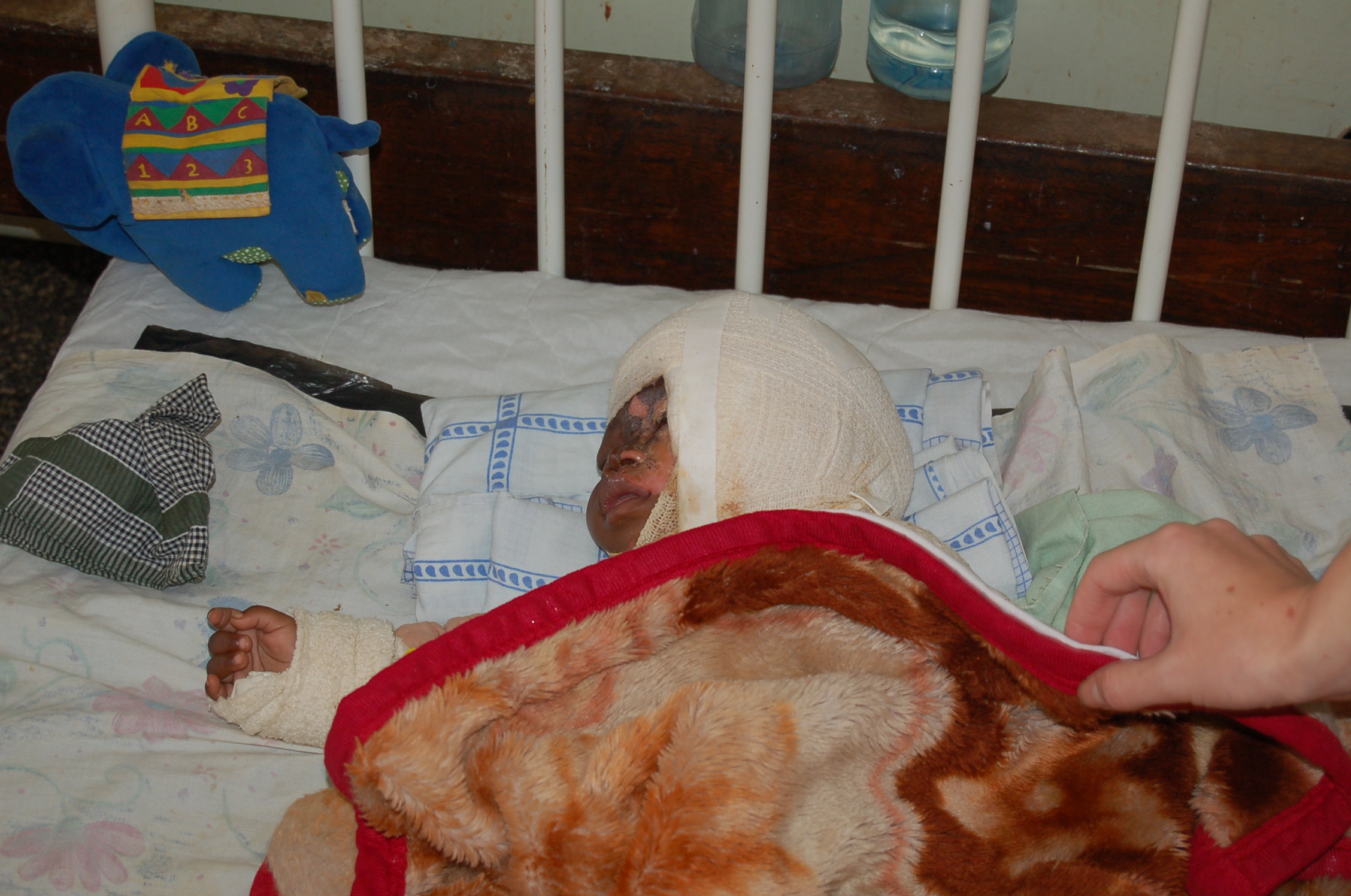
Child of 3 years
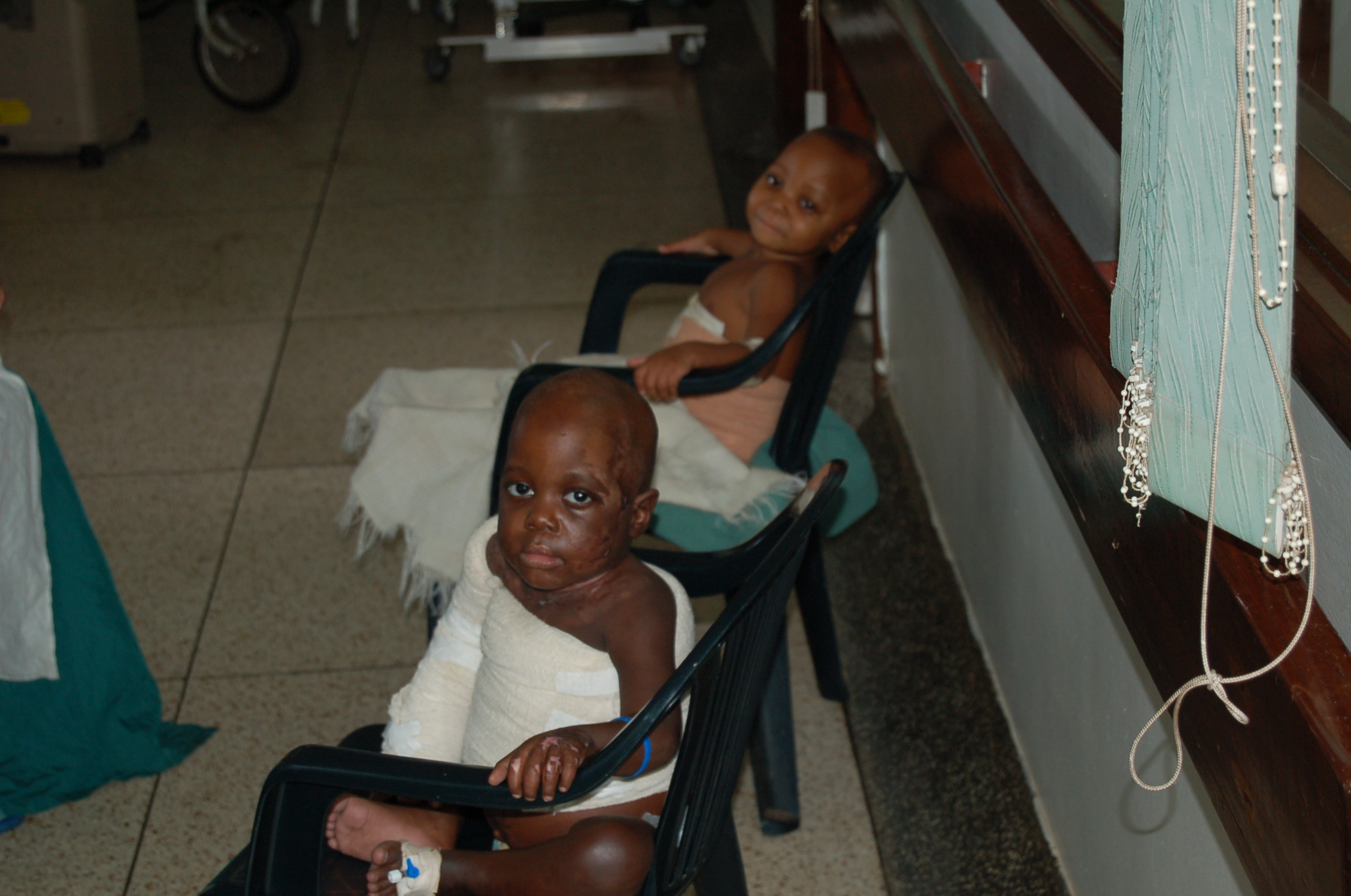
But as mentioned earlier, besides children, there are also elderly people (read: women) who are being treated for burns. The main causes of burns in the elderly are acids.
An example is a woman who got acid on her face and upper body at the end of her pregnancy. This woman has now been in the hospital for more than 5 months for treatment of her burns. During her stay, she gave birth to a boy named Emanuel. Many treatments still need to take place before she can go home.
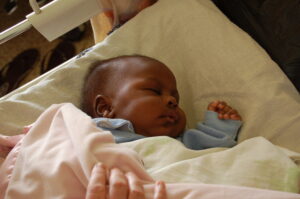 Emanuel, a cloud of a baby.
Tuesday, March 29, 2011
I spent the day writing the report and preparing to post it on the website. But after sleeping on it (NOT!), we are putting certain needs that the hospital urgently requires on a map.
- Sharing knowledge of both a medical and social nature
- Collecting hospital equipment from a single manufacturer so that different equipment manuals are not needed for maintenance (uniformity)
- Surgical tools
- Bandages and medication
- Nutrition (primarily proteins) / dietitian (sharing knowledge)
- Clothing for ICU, operating room, etc.
- Funds for staff turnover and unforeseen expenses (€ 25,000.–)
This can create an environment that generates employment.
Wednesday, March 30, 2011
Conversation with Lenneke Meulenkamp from Heart Vision.
A young woman with strong perseverance. She has recently started setting up a shelter for street children. Currently, these children live in an environment of cardboard boxes, open sewers, flooding, addiction, etc. Not long ago, her story was featured in the Telegraaf and Algemeen Dagblad. She is also engaging in creative activities with these children by making jewelry from paper and wire. Think of earrings, necklaces, bracelets, etc. Lenneke will take photos of this jewelry and have them posted on our site. Through the sales, she receives funds to purchase beds for children.
Thursday, March 31, 2011
Quiet day. Did some nice shopping and had a delicious meal at Robert-Jan's place
Friday, April 1, 2011
We slept in nicely and were picked up in the afternoon by Joseph, our private driver.
We had a pleasant drive to Fiduga Ltd. (part of Fides). We had a good and informative conversation with the managing director, Jacques Schrier. Former MD John, together with his wife, has set up a project within the company regarding health, such as a first aid post, HIV/AIDS treatment, family planning, etc. The company has a large number of employees working in 23 gigantic greenhouses. These employees are well taken care of in terms of salary, training, and a daycare center for the employees' newborn babies. We visited this daycare center and it was wonderful to see how these children were entertained (potty training). Furthermore, Jacques mentioned that his wife, Mary, has founded a school for mobile and disabled children. We will be visiting there on Tuesday, April 5th.
Impression of the company Fiduga Ltd.
Saar in conversation with Jacques Schrier
Employee at AH Enten
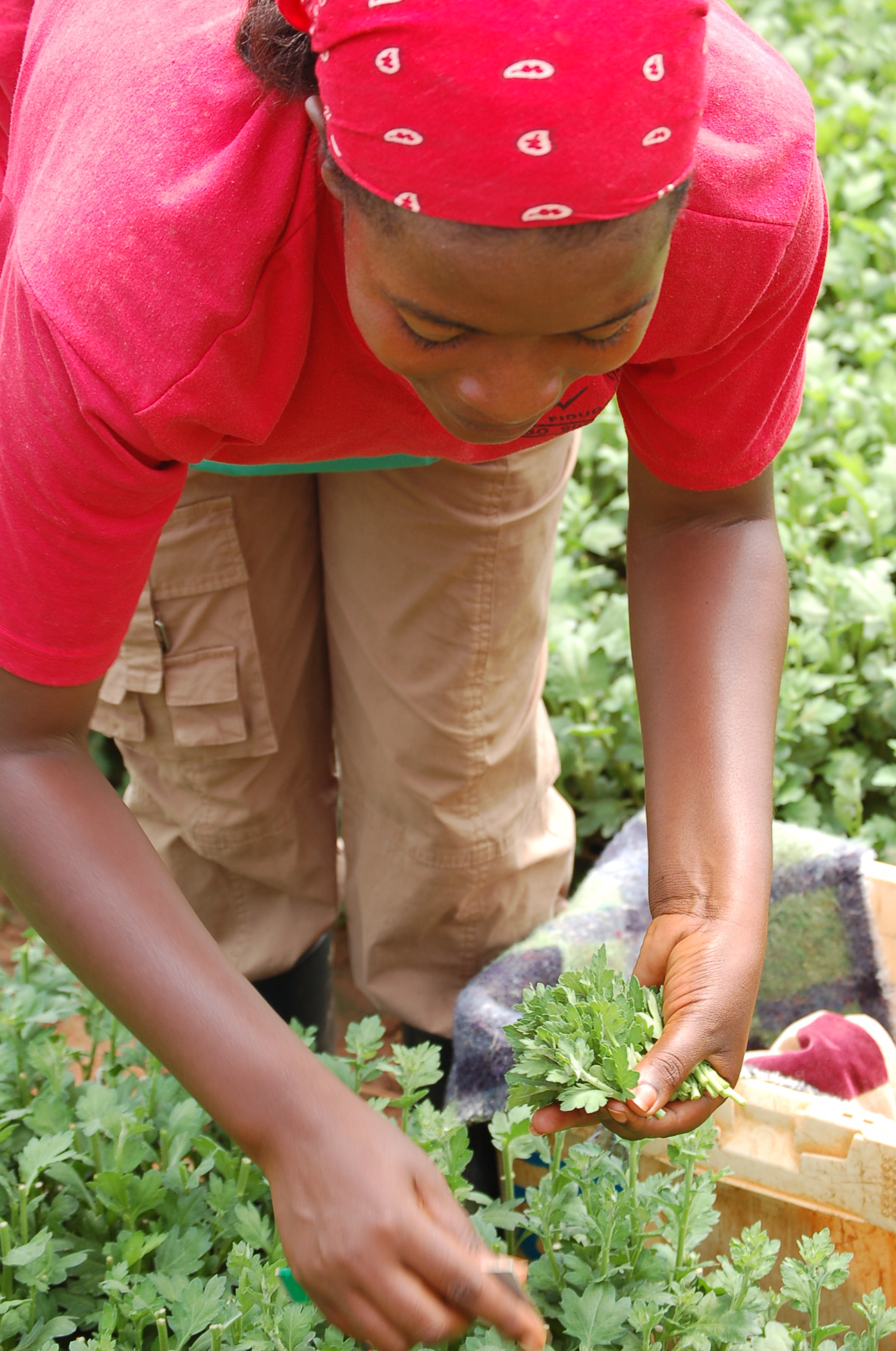
Overview of the greenhouse section

Saturday, April 2, 2011
I spent the day writing the report and preparing to post it on the website. I Skyped with the family back home and otherwise got a good rest.
Sunday, April 3, 2011
Nice and relaxed.
Monday, April 4, 2011
We went grocery shopping and had a nice cup of coffee, and during dinner we discussed whether we shouldn't visit the embassy. And who suddenly stood next to us: Kim Elverding, who works at the Embassy of the Netherlands in Kampala. We had a nice conversation with her.
Tuesday, April 5, 2011
Up early this morning because we had an appointment with Mary Schrier  (pictured on the left). A Kenyan woman married to Jacques of Fiduga Ltd. She has set up a school (Twin School) in the town of Seeta where children with disabilities and children whose caregivers cannot afford to send them to a “regular” school attend classes. Upon arrival at the school, we were welcomed by the children.
Next, Mary showed us the rooms that serve as classrooms. Originally, the buildings were residential houses. Everything was well organized and disciplined. Mary also showed us the vegetable garden and an unfinished space where a kitchen, a kind of clinic where pregnant women can be checked, and living quarters for the headmistress are being created. This space was added on and realized through donations from the Netherlands. It is not yet finished as the funds have run out.
What they have been able to achieve there in one year is incredible. The school has about 30 children and 9 staff members, one of whom is a gardener who has his accommodation on the grounds. He is very happy with that.
It is a moving story that one student stood at the gate every morning for three days to go to school. However, the management first had to locate the child's guardians to ask permission for the child to attend. In the end, they succeeded, and the school was able to welcome a good student.
The classes are divided into 5 groups: 3 groups of children aged 4 to 8 and 2 groups aged 9 to 13. The first 34 groups stay at school for half a day, and the others for an hour longer, as they can do their homework during that hour. When the children go home, their caregivers saddle them with chores in and around the house. So they have no time to do their homework. Hence that extra hour they stay at school. Nicely resolved by the management.
School impression
Group 4 to 8 years in classroom
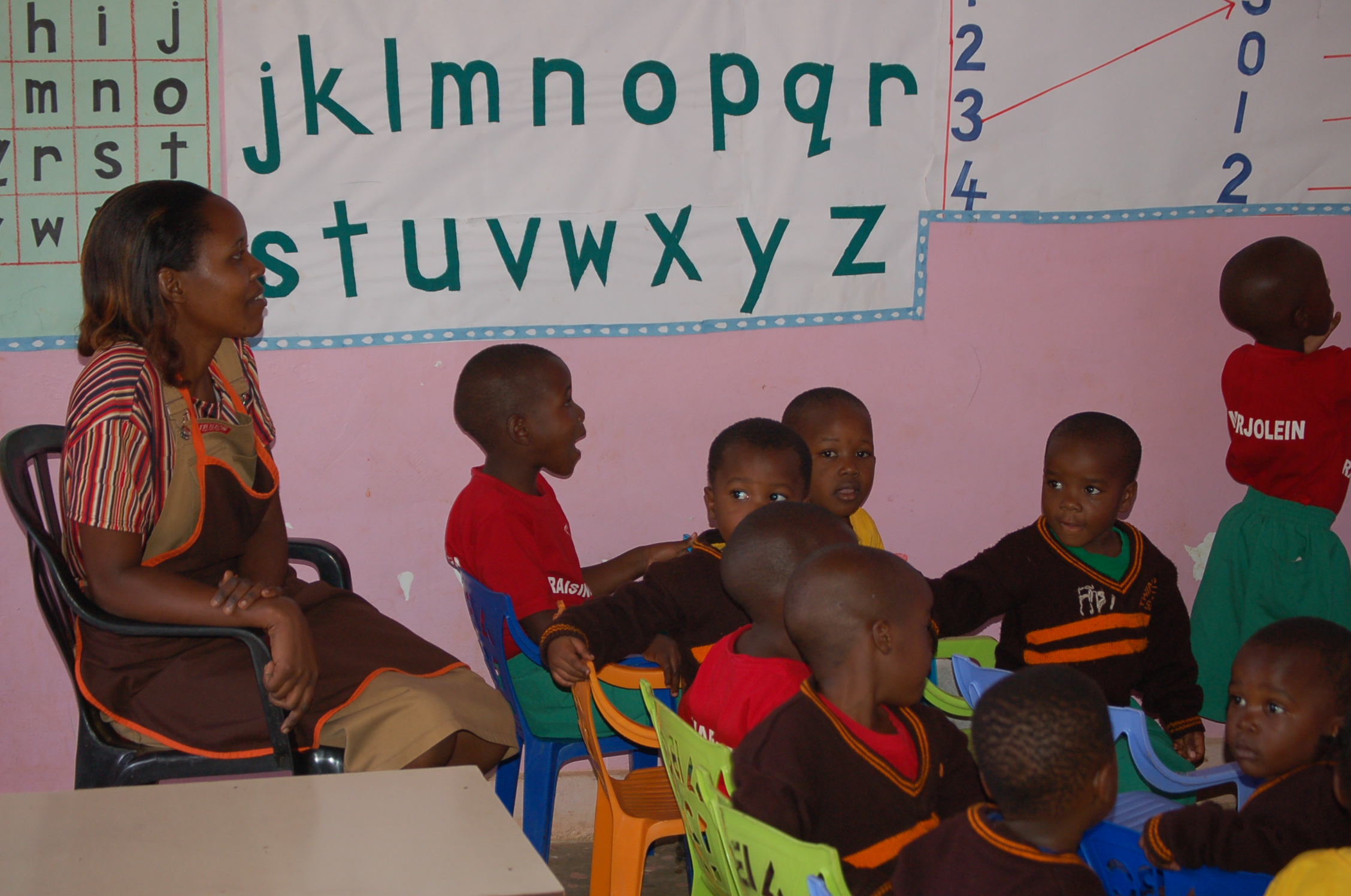
Groups aged 9 to 13 in the classroom

Courtyard
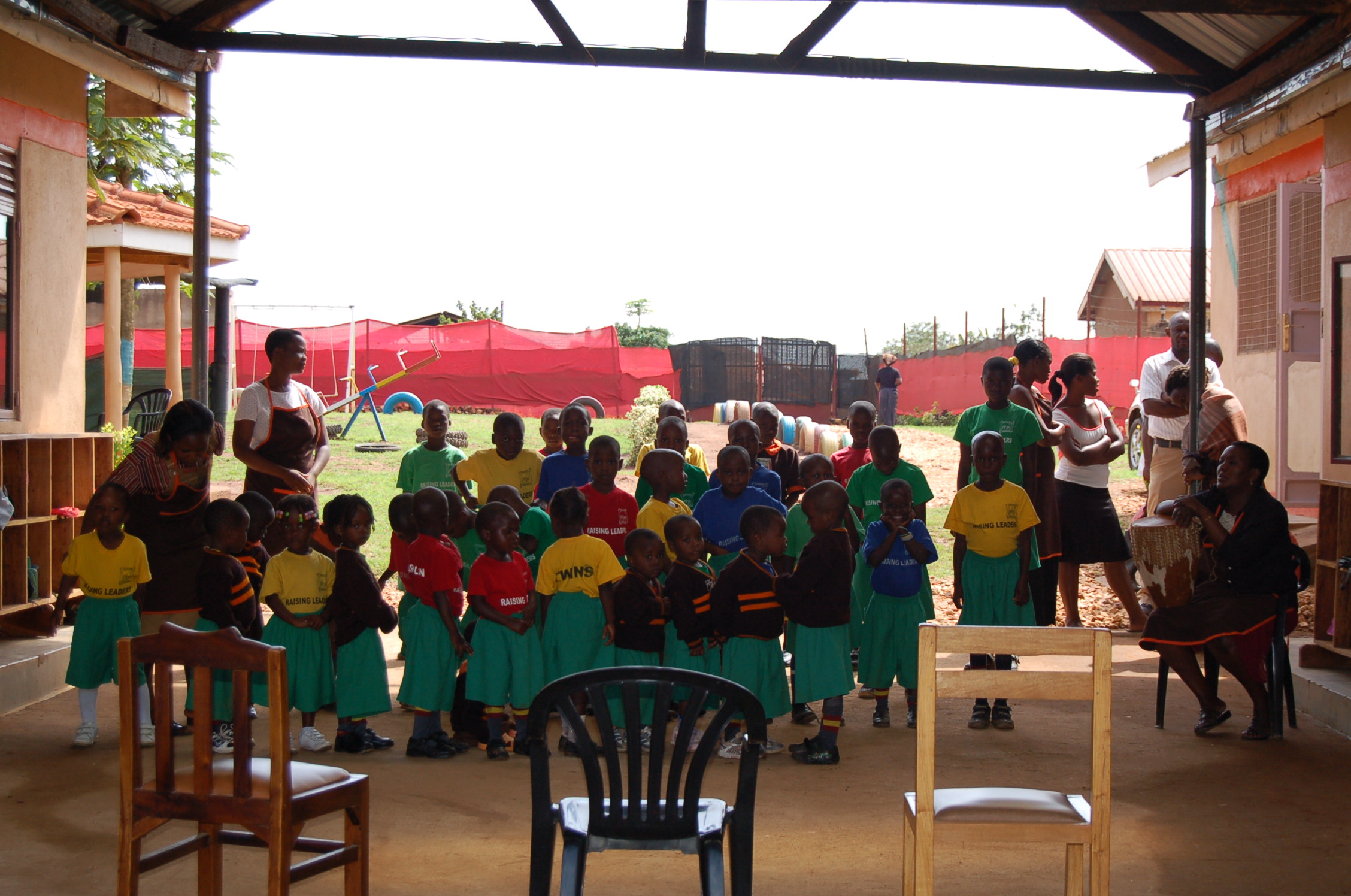
Next, we spoke with Mary about what is still needed at this school and put it down on paper. These are practical items that we in the West have stored in attics or sheds. Think of children's toys, games, coloring supplies, outdoor toys, and for the clinic, the foundation will contact the relevant agencies. So, if you have something lying around that is complete and intact, please inform the foundation about it. You will make the children of the TWIN school incredibly happy. After saying goodbye to the children and staff, Mary drove us back to our apartment.
Wednesday, April 6, 2011
Today I updated the report again and posted it on the website. Took the rest of the day to rest and enjoyed myself.
Thursday, April 7, 2011
Day of rest and enjoyment. Though there was a tropical downpour lasting an hour.
Friday, April 8, 2011
Today I experienced firsthand the mentality here.
In our apartment, a cupboard door had come loose and needed to be repaired. It had been agreed that the carpenter would arrive at 10 o'clock, but he didn't show up until a quarter past 11 with a hammer, screwdriver, and small chisel. To put the door back in place, he had to use a step stool. This was fabricated from two wooden stools stacked on top of each other and held in place by the complex's concierge. While installing it, he discovered that the screws could no longer be used and that he had to get new ones. "I'll be back in 5 minutes," he said, but you can already guess what happened... Half an hour later, he showed up again. He put the door back in place and then went to repair another door. Well, I still can't find an answer to how he intended to repair that one. Chiseling into the door frame to install the door fixings. Because of this, he had to make new holes for the fixings and discovered that he didn't have a nail with him. And sure enough, here it comes again, “I’ll be back in 5 minutes”…… So you can understand that we were fed up and told him to just come back when we were back in the Netherlands. Surprised, he picked up his things and left. After this farce, we took a lovely shower and then called John to go out.
We went to the Bahai Temple. It is located on top of a mountain not far from our  apartment. There are eight of these temples worldwide. They are located in Chicago, Panama City, Santiago (Chile), Frankfurt, New Delhi, Sydney, Western Samoa, and Kampala.
Stunning and peaceful surroundings, both outside and inside the temple.
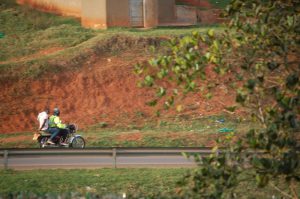
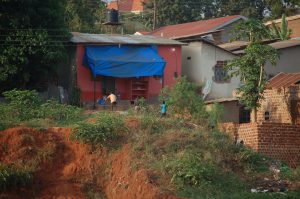
After that, we went to Joseph's house. We met his wife Eva and their young son Joshua. Their other two children were at school at the time. He proudly showed us his home, which stands on his own land. He bought this land with the money from driving the boda boda (motorcycle taxi). With the money from the taxi, he had another house built (opposite his current home) which he plans to rent out, so that he can use the proceeds to send his children and the children of his brothers and sisters to school. He supports his entire family since he is the eldest.
